
On our clients
When the Couple Comes from the Creative World
Less wedding production, more beautifully designed gathering. What planning looks like when both partners are visual thinkers who live inside art, design, fashion, and food.
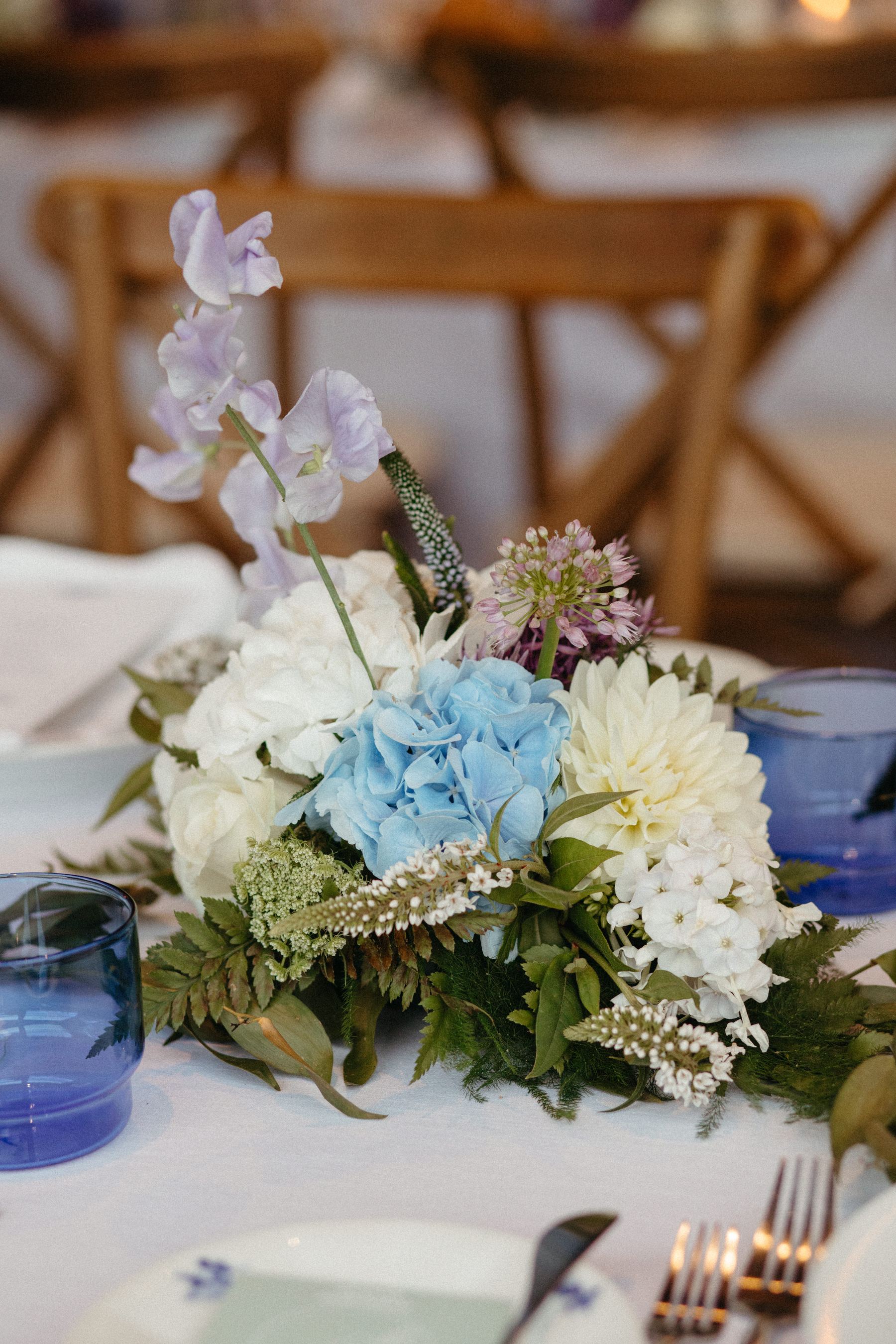
There is a particular kind of couple that arrives at a first meeting with a folder of references — not a Pinterest board, but something more considered. A restaurant in Tokyo they ate at three years ago and have not forgotten. A room in a Milanese gallery. A photograph from a friend’s dinner party in a Copenhagen courtyard on a night in late August when the light did what it does and everyone stayed until 2am without realising it.
These couples do not want a wedding. They want the best evening of their lives. They want their guests — many of whom are themselves designers, editors, architects, chefs — to walk away having experienced something they could not have assembled themselves.
This is a different brief from the one most wedding planners are trained to receive. And it changes almost everything about how we work.
The brief is qualitative, not quantitative.
With a conventional brief, the opening questions are practical: how many guests, what budget, which season. These remain important, but they are not where the conversation begins. With creative couples, the conversation begins with references and sensibility — with what they love and, crucially, what they cannot stand.
The couple who has spent a decade with strong opinions about typefaces, interior light, and the quality of a wine list will have equally strong opinions about their wedding. This is not a complication. It is a gift. It means the brief is specific, and specificity is what makes a celebration worth attending.
What they typically cannot stand: fussiness, unnecessary florals, anything that signals effort rather than embodying it. The table runners that exist to announce that someone tried. The décor that performs luxury without achieving it. The schedule that treats guests as an audience rather than participants.
The venue is not a blank canvas.
Creative couples rarely want a neutral space that can be transformed into anything. They want a room that already knows what it is — a restaurant with a point of view, a gallery with a particular quality of wall, a courtyard that has been accumulating character for two hundred years. The venue is not the backdrop. It is the first argument the evening makes about itself.
In Copenhagen, this opens up a different set of possibilities. The city has remarkable rooms that do not appear on venue-finder websites — accessible through relationships, through reputation, through the kind of knowledge that accumulates over two decades of working here. Industrial spaces in Refshaleøen. Private historic interiors in Frederiksstaden. Restaurant spaces where the kitchen is the feature.
The food is never secondary.
For couples from the food world — and many creative couples are, even if cooking is not their profession — the dinner is the evening. Not a component of it. We work with chefs who understand this: who write menus as a form of argument, who source with care, who are capable of producing something that a room full of people who eat and drink well will remember.
This means the wine list is equally considered. It means the sommelier is a collaborator, not a vendor. It means the morning-after brunch is designed with the same care as the dinner, because the people in that room will be comparing notes.
Restraint is the hardest thing to execute.
Every creative couple we have worked with has said some version of the same thing: we want it to feel effortless. We do not want guests to feel the machinery. We want them to feel the evening.
This is the most ambitious brief there is. Effortlessness is not the absence of effort — it is the product of enormous effort made entirely invisible. The schedule that runs perfectly and is never announced. The lighting that shifts without anyone noticing it has shifted. The florist whose work looks like the room chose it.
We have spent over twenty years learning how to make this happen. It does not come from templates. It comes from knowing every element well enough to trust each one, and from knowing which ones to leave out.
If you are planning a celebration and the brief begins with a reference folder rather than a guest count, we would like to hear from you.
Private commissions