
Planning from abroad
Planning a wedding from another country
Most couples now shape a destination wedding long before they set foot in it — across time zones, on screens, in an order of their own. This is how that works when it is done well.
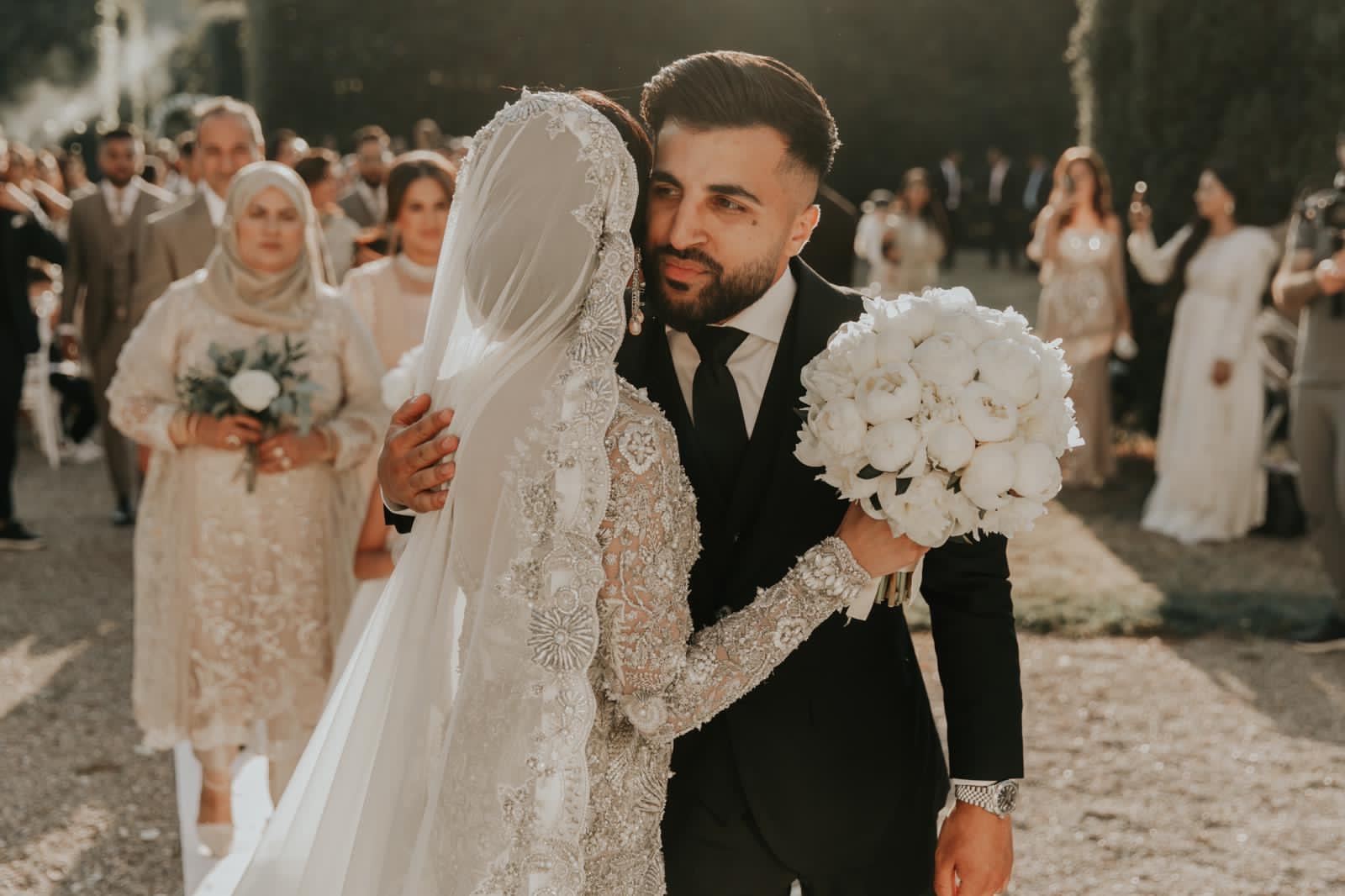
The first wedding decisions used to be made in a room: a venue visited, a date agreed, a planner introduced. Today most couples arrive with a shortlist already formed — from photographs, a shared document and a long conversation between the two of you. Nothing about that is a weakness. It is a different order of work, and it suits couples who would rather understand something before committing to it.
The couples who plan well from abroad are not the ones with the largest budget. They are the ones who make the three structural decisions early, verify what cannot be seen in a photograph, and leave the rest of the year to fill those decisions in.
The three decisions that come first
When
Season is the only question with a real answer before anything else is chosen. A September celebration in Mallorca and a September celebration in Copenhagen are different events: one still holds 30°C at six in the evening, the other is dark by seven and needs candles by four. Season decides light, heat, daylight, harvest, price and availability — all of which are far harder to change later than a guest list.
Where
Where follows from the gathering you want, not the country you like. A weekend of fifty people who fly in asks for an estate, a hotel or a house you can take over. A wedding of twenty in a city asks for a restaurant room and a good kitchen. Begin from the shape of the days, and the map narrows quickly.
Who
The guest number is the decision couples postpone and cannot. It changes the venue category, the catering format, the transport plan, the room block and the budget — usually more than any design choice you will make. An honest working range, agreed between the two of you, is worth more than a precise number nobody believes.
Shortlisting venues from a distance
A venue photograph cannot tell you how the room sounds, how hot it is at six in the evening, how guests arrive and leave, what happens if it rains, or whether the kitchen can actually serve the menu you have in mind. Before you sign anything, ask for five things:
- A video walk-through filmed at the same hour of day as your ceremony, not a promotional film.
- The noise curfew, the neighbours, and what happens when the evening runs long.
- The rain plan and the infrastructure: power, water, sanitation, lighting, and how far the walk is.
- The full contract — what is included, what is charged per guest, and the deposit and cancellation terms.
- The names of two couples who married there this year, and the vendors they used.
Venues that answer these questions readily are usually the ones that run well. Venues that find them unusual are telling you something.
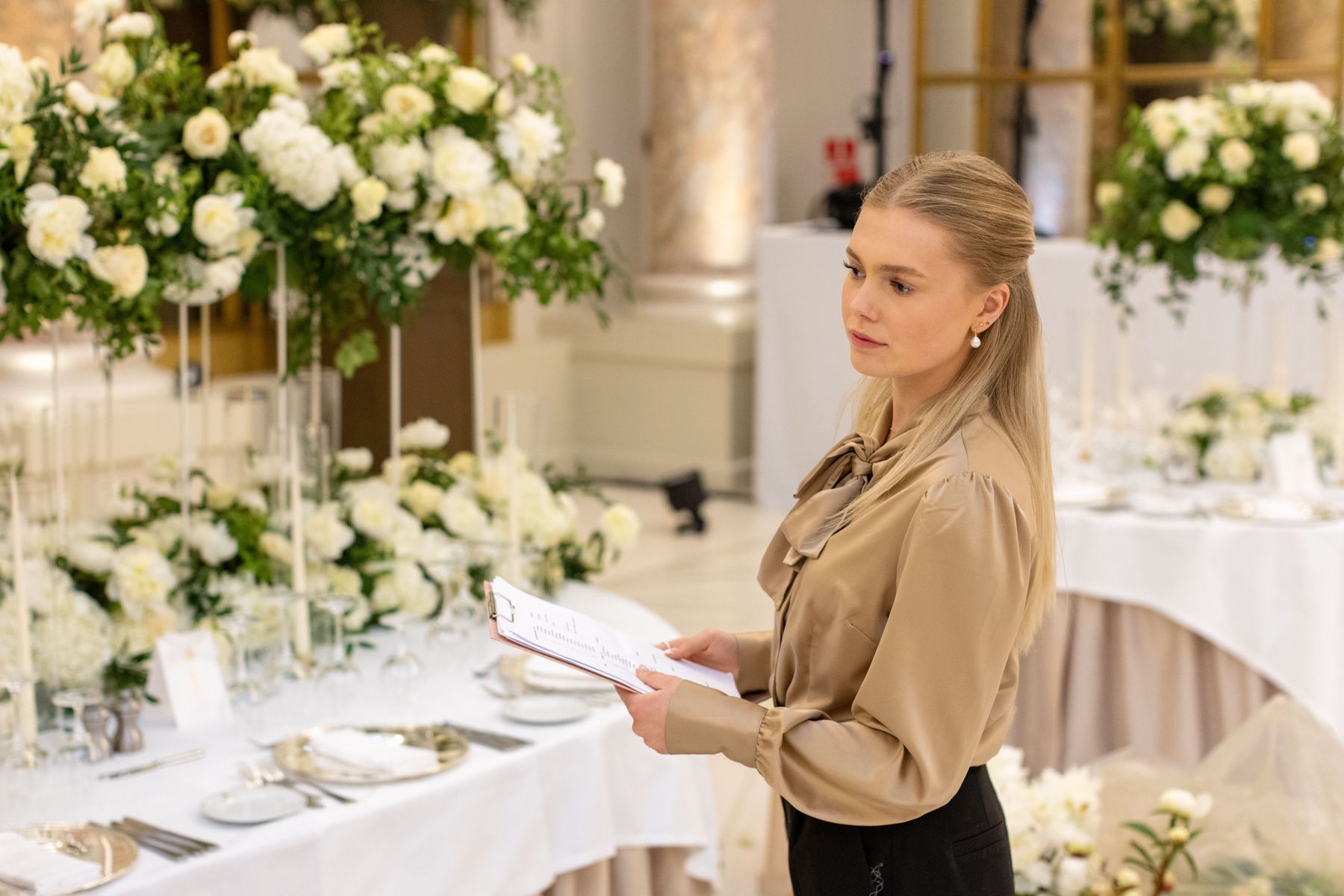
The legal layer
Civil requirements are the part of an overseas wedding that cannot be redesigned. Some countries — Denmark among them — make it remarkably simple for international couples. Others require a civil ceremony before any religious or symbolic one, or ask for documents that take weeks to obtain and legalise. Some countries’ symbolic ceremonies carry no legal weight at all, so couples marry at home and celebrate abroad.
Check this before the venue, not after: the paperwork decides whether your chosen date is possible. Our guide to getting married in Denmark sets out the documents and timelines in detail, and each country guide covers its own route.
What the budget actually contains
A destination wedding budget is not one number, it is five: venue and infrastructure, catering and beverage, design and production, photography and film, and the coordination itself. Add a sixth line that couples most often underestimate — the guests’ travel and rooms.
The structure matters more than the total. The same money spent deliberately buys a noticeably better evening than the same money spent in the order a vendor list happens to arrive in. We work without packages and without a minimum budget, because the honest question is never what a wedding costs but what it should be spent on — and that answer is different for every couple.
The shape of the weekend
For guests flying in, a destination wedding is not a day but a weekend. Arrive the day before, not the morning of. A welcome dinner does more for a group of strangers than any seating plan. A brunch the next morning is what people remember. Build transfer and arrival buffers into the programme from the start, and the wedding itself stops feeling like logistics and starts feeling like a holiday with a ceremony in it.
What you can plan yourself — and what you cannot
Being organised is not the same as being on site. Couples plan well themselves: the guest list, the date, the mood, the music, the things that matter to them and the reasons they matter. That work is worth doing, and no one should hand it over.
What is harder from abroad is the layer underneath: contracts and deposit terms, vendors coordinating across languages and time zones, a timeline that accounts for load-in, power, weather and the sound curfew, and the authority to make a decision in the room at four in the afternoon when something has moved. That is the work a planner is actually paid for — not the mood board.
How planning with us works from abroad
It begins with a written brief and one conversation, at a time that suits your evening rather than an office’s. From there: a shortlist with the questions above answered, a budget structure you can argue with, a document set you can read at midnight in your own language, and one point of contact throughout. You are never asked to visit before you are ready; we travel to see a room when seeing it will change a decision, not as a courtesy.
Every celebration is personally led by Christel and delivered with a small, experienced production team, and only a limited number of weddings are taken each year. If you would rather understand your own plans before speaking to anyone, the planning outline tool gives you a written overview of what your celebration would need — no form, no obligation.
Timeline
A realistic sequence
Twelve to eighteen months
Structure
Decide when, where and who. Check the legal route for the country. Shape the budget and shortlist venues with the five questions asked of each.
Nine to twelve months
Securing
Venue and key vendors signed, room block held, design direction agreed, dates shared with guests who are travelling far.
Six to nine months
Detail
Menu, stationery, music, transport and the weekend programme. Guest travel questions start arriving; answer them once, in writing.
Six weeks out
Locking
Final numbers, seating, the running order, and a contingency written for the two or three things most likely to move.
The week itself
On site
Christel and the production team arrive before the guests and stay until the last one leaves. Nothing visible, everything handled.
Questions
Planning from a distance
Can we plan a destination wedding entirely online?
The decisions can be made from abroad; the verification cannot be entirely. Contracts, site access, power and weather plans, and the walk-through of a room at the hour of your ceremony are what stop an online plan from becoming an assumption. A short visit, or a planner on the ground, is how you close that gap.
Do we need a planner if we are organised?
Not for the creative brief — that work is yours. The value of a planner is on-site: contracts, vendor coordination, a timeline that accounts for load-in and curfews, and someone with the authority to decide in the moment. Many couples who plan their own wedding discover that the day itself is the one thing they cannot attend to.
Is a destination wedding cheaper?
Not automatically. It is often better value, because a smaller guest list and a single venue can buy more quality per person than a large local wedding. But travel and accommodation are a real cost for guests, and should be planned for rather than discovered.
When should venues be booked?
The strong dates in the Mediterranean and at sought-after estates are often taken a year to eighteen months ahead. If your date is fixed by a holiday, a festival or a visa window, choose the venue before you print anything.
Can we bring our own photographers and florists?
Usually yes, and often you should — a designer who understands your context is worth travelling with. Check what the venue charges for outside vendors, and who handles their load-in and insurance.
How many weddings do you take each year?
A limited number, so that each celebration can be personally led from first conversation to the last guest leaving. That is also why first conversations happen well before a date is fixed.
Continue
Getting married in Copenhagen
City palaces, castles and harbour rooms, and Europe's simplest legal process.
Getting married in Tuscany
Villa types, the legal route for foreign couples, season and cost structure.
The approach
How a commission is planned, designed and produced from the first conversation.
Planning outline
Describe what you are planning and receive a written overview of what it would need.
Private commissions