
Mallorca
Getting married in Mallorca
Mallorca rewards couples who plan for the island as it actually is: hot, hospitable, tightly regulated, and small enough that everything depends on how you move people around it.
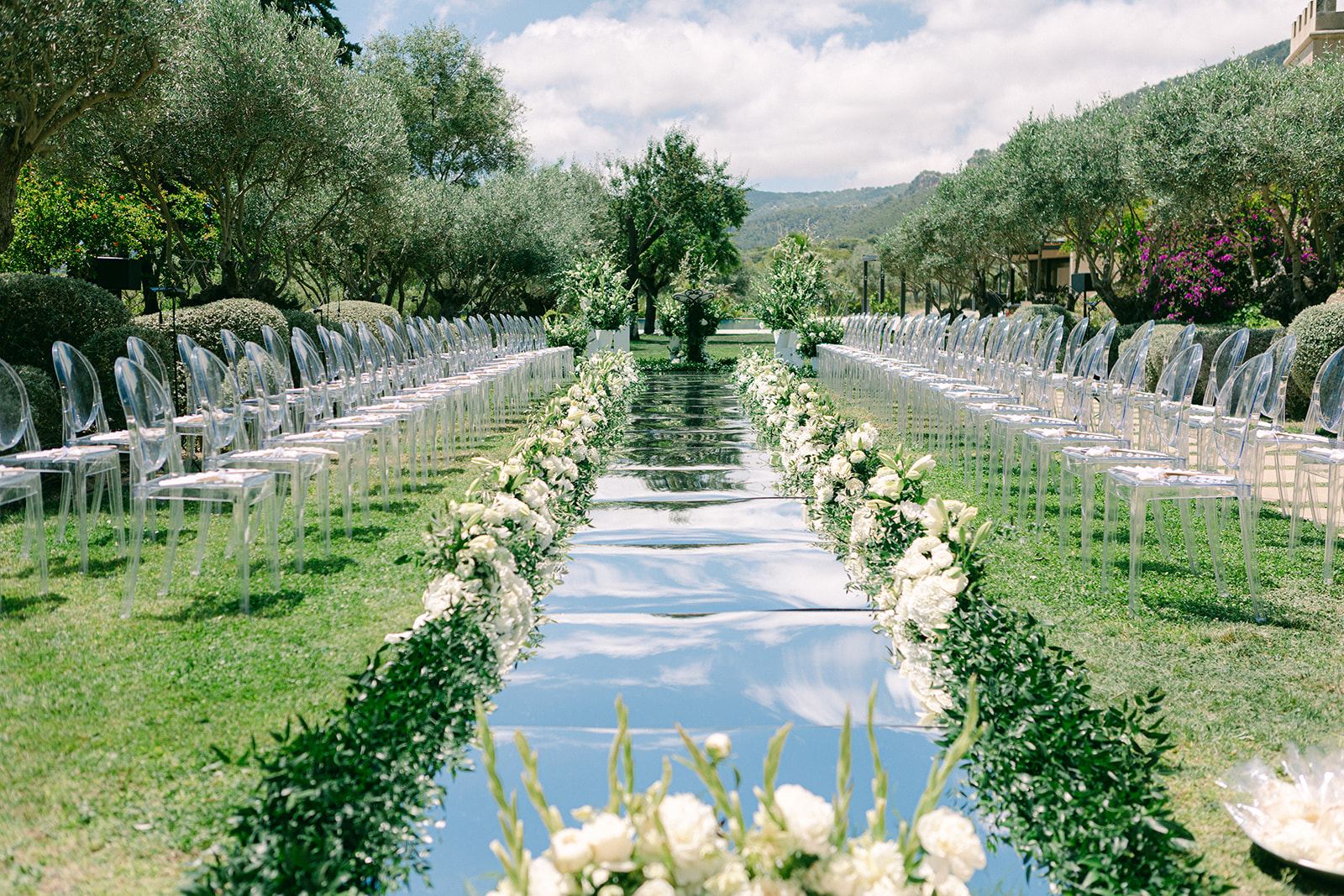
Mallorca is the most efficient destination in the Mediterranean for a multi-day wedding. Guests fly directly from most European cities, the island is crossable in an hour, and the finca tradition gives you private estates with accommodation, gardens and the kind of outdoor dining that lasts until two in the morning. It is also the destination where an underprepared plan fails most visibly, because the constraints — heat, water, licensing, curfews — are real and enforced.
Where the celebrations happen
The finca
A traditional stone estate, usually inland or in the foothills, with olive or almond groves, terraces, a pool and beds for the core group. This is the classic choice and the strongest one for a weekend rather than a day. Assess it operationally: kitchen capacity, power supply, water pressure, shade, and how many guests can actually dine under cover if the weather turns.
Serra de Tramuntana properties
Mountain and coastal estates around Deià, Sóller and Valldemossa give the most dramatic landscape on the island. The trade-off is access: narrow switchback roads that limit coach size, longer transfer times, and set-up logistics that add cost. Beautiful, and worth it when the guest group is small enough to move in minibuses.
Coastal and sea-facing venues
For couples who want the Mediterranean in the frame. Wind is the variable that decides the ceremony hour and the floral and lighting design; a table plan that works inland can be unusable on an exposed terrace.
Palma
The old city offers palacios, courtyards and rooftops, plus hotels that keep guests within walking distance of dinner. The most practical structure for a large international group is often Palma for accommodation and the welcome evening, with the wedding day at an estate.
The legal question
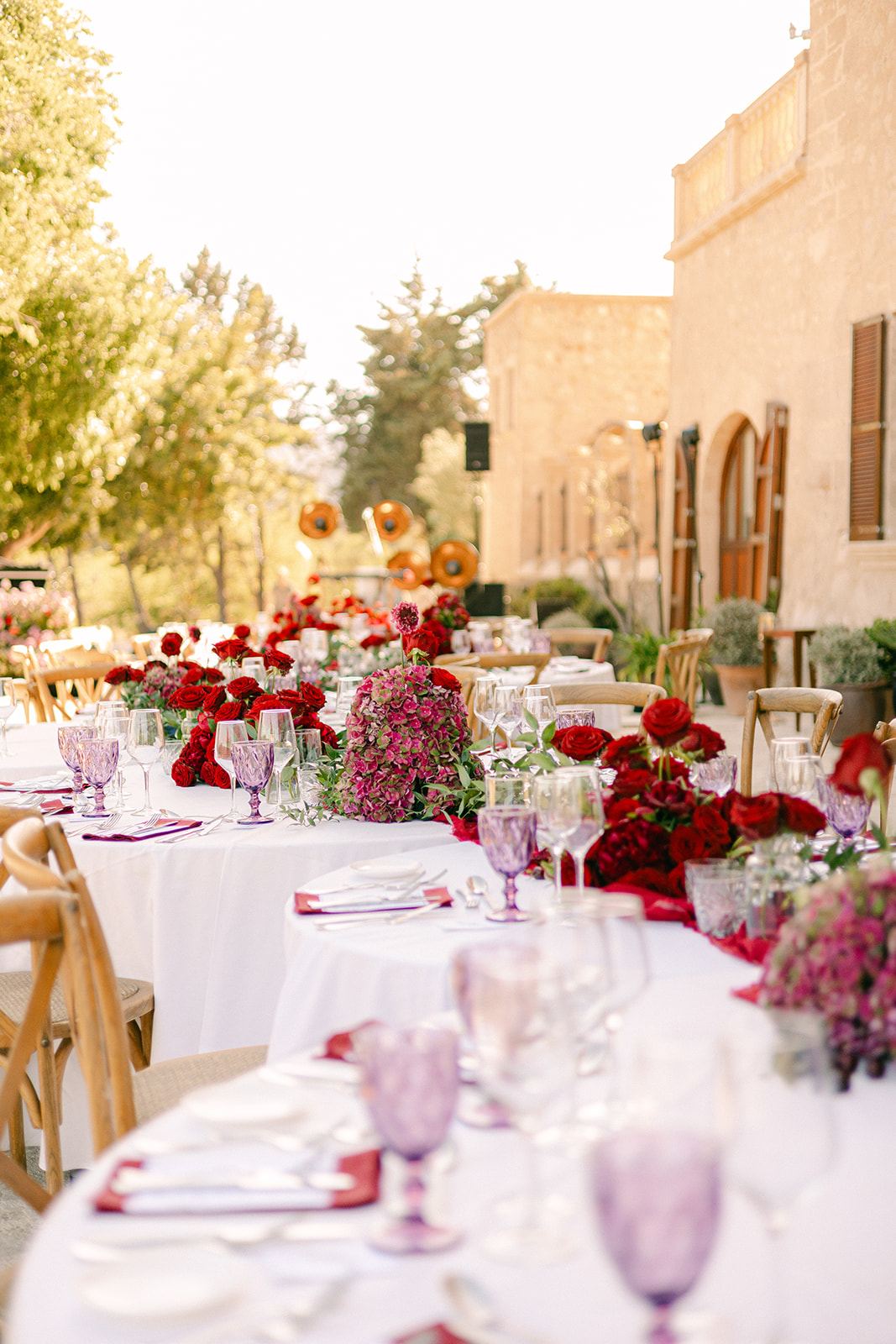
Spain is not a straightforward country in which to hold a legally binding civil marriage as a non-resident couple: the civil process is residency-based and administered locally, and the timeline is not something to build a guest list around. In practice, most international couples marrying in Mallorca complete the legal marriage in their own country — before or after — and hold the full ceremony on the island with a celebrant.
This is not a compromise. The ceremony is written for you rather than read from a statute, it can be held wherever you want on the estate, and it can be bilingual or multi-faith. If a legally binding ceremony on the island matters to you specifically, that requirement has to be assessed against your nationalities and residency at the very start of planning, because it constrains both the date and the venue. Where the legal route is the priority, Denmark is often the more sensible answer — see getting married in Denmark.
Heat, water and shade
July and August are hot, and inland fincas are hotter than the coast. Plan a late-afternoon ceremony, provide genuine shade rather than decorative shade, water on arrival and throughout, fans, and a cool room for guests who need it. May, June, September and October are the months that give you the island’s light without asking guests to endure it. Water use on estates is also a live issue in dry summers; a venue should be able to explain its supply.
Noise curfews and how the evening ends
Mallorca enforces noise limits, and estate licences typically restrict amplified music outdoors from midnight or earlier, with the party expected to move indoors afterwards. This is the single most common source of disappointment on the island, and it is entirely avoidable: ask for the venue’s licence terms in writing, then design the evening around them — outdoor band and dinner, indoor or acoustic continuation. A venue that is vague about its curfew is telling you something.
Guest movement
Almost every Mallorcan celebration runs on transfers. Coaches from Palma or the hotel cluster to the estate, staged departures rather than one, and a final return late enough that nobody drives. Confirm road access for the coach size at the specific estate — the last kilometre decides it. Hire cars are common on the island and rural roads after a long dinner are not the place for them.
The multi-day programme
Mallorca is built for three days: a welcome dinner, the wedding, and a recovery lunch or boat day. Programme them deliberately. Pacing is the difference between guests who feel hosted and guests who feel scheduled — one anchored event per day, with genuine free hours, and clear information so nobody has to ask what happens next.
What the money goes on
Estate hire, catering and beverage, production (furniture, glassware, linen, lighting, sound, shade or marquee), floral volume, staffing, transfers, and the indoor contingency you hope not to use. On estates without full event infrastructure, temporary kitchen and generator hire are normal additions. Spanish suppliers quote variously net or gross of IVA; a budget that does not standardise this will drift, so we build every budget gross with contingency from the start.
How we work here
Christel Winther has planned and produced weddings since 2002 and accepts a limited number of commissions each year, each personally led, supported by a small, experienced production team. In Mallorca that means venue research and site visits, supplier assessment and negotiation, licence and curfew verification, guest travel and transfer logistics, multi-day programme design, budget accountability, and on-site direction.
See Mallorca for celebrations we have produced on the island.
Questions
Frequently asked
Can we legally marry in Mallorca?
A legally binding civil marriage in Spain is residency-based and slow for non-residents. Most international couples marry legally at home and hold the full ceremony on the island with a celebrant, which gives complete freedom over language, place and content. If a binding ceremony on site is essential, it must be assessed against your nationalities and residency before any date is fixed.
When is the best time of year?
May, June, September and October. July and August are hot, particularly inland, and require a much more careful approach to timing, shade and guest comfort.
How late can the party run?
That is set by the venue's licence, not by preference. Amplified outdoor music is commonly restricted from midnight or earlier, with the celebration continuing indoors. Get the terms in writing early and design the evening around them.
Do guests need hire cars?
Preferably not for the wedding day. Coach or minibus transfers with staged departures and a late final return are standard, and safer after a long dinner on rural roads.
Related
Mallorca
The destination, and celebrations we have produced there.
Getting married in Tuscany
Villas, the Italian legal route, cost structure and season.
Private estate weddings
Infrastructure and contingency for estate celebrations.
Destination weddings in Europe
How the practice works across Europe, and where.
Private commissions