
Venues & locations
Private estate wedding planning
What distinguishes a truly capable private estate venue from one that simply looks the part — operational infrastructure, catering logistics, grounds management, and what to verify before you commit.
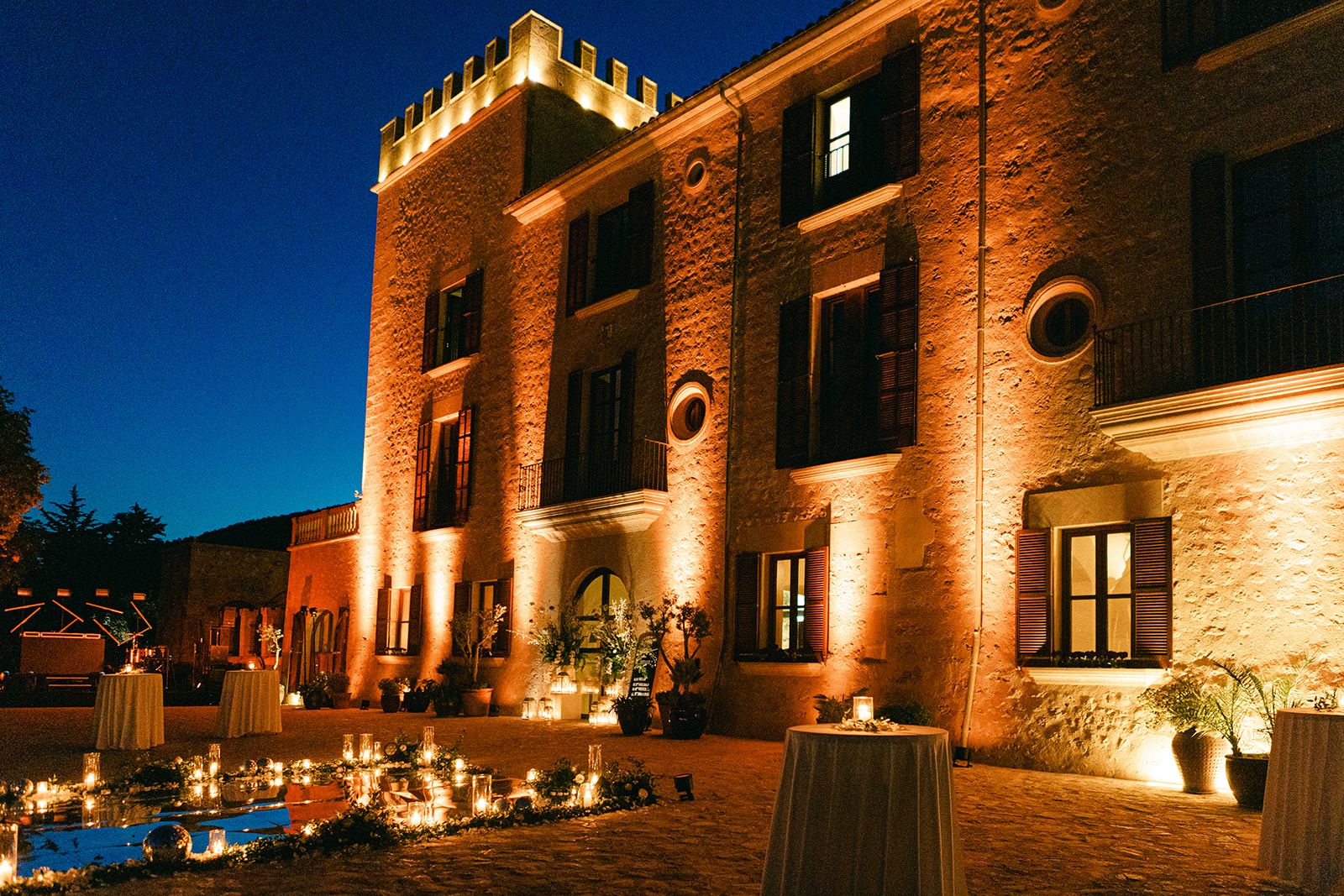
A private estate offers something that a hotel ballroom or commercial event venue cannot: the feeling of inhabiting a place rather than hiring it. When it works well, an estate wedding has a quality of domesticity at scale — guests moving through gardens, across courtyards, between formal rooms — that produces a particular kind of relaxed intimacy that is very difficult to manufacture in a purpose-built event space.
When it does not work well, an estate wedding becomes an exercise in solving infrastructure problems in real time. Understanding the difference between an estate that is genuinely capable of hosting an event of your size and complexity, and one that is beautiful but operationally under-prepared, requires specific questions and a site visit that goes beyond the hospitality tour.
What “exclusive use” actually means
Many estate venues offer exclusive use, meaning no other guests or events share the property during your booking period. This is distinct from a hotel that blocks rooms for your party while still operating its public areas. True exclusive use means: no other paying guests, no restaurant service to the public, no overlap with a parallel event in a separate wing. Confirm precisely what the estate means by exclusive use, including any staff or maintenance activities that continue during your hire period.
Infrastructure: the questions to ask
Power supply
A large-scale event — catering, lighting, sound, bar service, refrigeration — places a significant electrical load on a building that was not designed as an event venue. Many historic estates have electrical infrastructure that predates modern event demands. Before committing, confirm: the available power supply in amps, whether the estate has generator backup, and what additional power infrastructure your production will require. A temporary generator hire is a common addition to estate events; building this into the budget from the start avoids a late-stage surprise.
Kitchen facilities
An estate with in-house kitchen facilities capable of producing a three-course dinner for 120 guests is a very different proposition from an estate where all catering must be brought in and prepared in a temporary or converted kitchen space. Assess the kitchen infrastructure honestly: is it a professional catering kitchen with commercial-grade equipment, or a country house kitchen that will need significant supplementation? For events with complex catering requirements — multiple dietary categories, multiple courses — a temporary kitchen build may be required. This has both cost and logistics implications.
Toilet facilities
A house designed for a family of ten does not have the toilet capacity for 100 guests over a four-hour reception. Many estate venues supplement with temporary event toilet facilities. These range from very poor (plastic portable units) to genuinely high quality (fully serviced, tented structures with proper plumbing). Confirm exactly what is available and, if supplementary facilities are required, budget and arrange for a quality supplier.
Parking and access
Rural estate venues often have limited formal parking. For an event where guests are self-driving, confirm the parking capacity and the surface condition (a gravel drive is different in July sunshine than in rain). For events where guests are transferred by coach, confirm the access roads can accommodate the vehicle size.
Outdoor ceremony spaces
An estate’s garden or grounds are typically the primary attraction for outdoor ceremonies. Assess them with the following in mind: the quality of the surface underfoot (grass, gravel, stone), the available shade or shelter during the warmest part of the afternoon, the acoustic environment (road noise, nearby agriculture), and the realistic contingency if weather requires moving the ceremony indoors with less than 24 hours’ notice. The best estate venues have an indoor ceremony space that is not a compromise — if the indoor option is a cleared storage room with borrowed chairs, it is not a genuine contingency plan.
For outdoor tent events on estate grounds, additional considerations include: ground conditions for tent pegging, access for tent installation vehicles, and any planning or permission requirements for temporary structures on listed or heritage properties.
Accommodation on the estate
For a wedding weekend where the estate accommodates the core guest group, the allocation and management of rooms is part of the event programme. Verify: the exact room count and configuration, whether each room has an en-suite bathroom, the quality of the bedding and towels, whether breakfast is provided on the morning after the wedding, and the check-in and check-out protocol. For estate venues that also operate as a public hotel or holiday let, confirm exactly which rooms are included in the exclusive use hire.
Vendor access and logistics
Multiple vendors will need access to the estate on set-up day and event day: florists, caterers, lighting and AV teams, photographers, musicians. Confirm: what time vendors can access the estate for set-up, where delivery vehicles can park, whether there are any size or weight restrictions on vehicle access, and what cleaning obligations apply at the end of the event. A clear vendor access document, provided by the planner to all suppliers, prevents the kind of access problems that create stress on set-up day.
Noise curfews and neighbour relations
Rural estate venues almost always have local noise restrictions that apply from 22:00 or 23:00, and often earlier for outdoor sound. This affects the programme: if the band plays until 23:00 and the dancing is expected to continue, plan for an acoustic programme or move the party indoors. Understand these restrictions in detail, not in outline. Exceeding them damages the venue’s relationship with its community and may result in the event being shut down. For evening programmes that matter to you, verify that the venue can support them.
For estate and manor-house celebrations in Denmark, see Denmark, and the portfolio for celebrations we have planned in private settings.
Questions
Frequently asked
How do we assess whether an estate can genuinely handle our guest count?
Beyond the headline capacity figure, assess the practical capacity of the estate's infrastructure: kitchen, power, toilet facilities, and indoor space. A venue that can seat 120 in a marquee but has kitchen capacity for 60, or insufficient toilets for 120 guests, is not actually a 120-person venue. Ask for specific details, not headline capacity, and visit in person.
Is a private estate wedding more expensive than a hotel or commercial venue?
Often yes, particularly when infrastructure costs are fully accounted for. The hire fee itself may be comparable, but the additional costs of temporary kitchen supplementation, generator hire, supplementary toilet facilities, and the logistics of bringing everything to a self-catering venue add up. A transparent cost comparison should include all infrastructure additions, not just the venue fee.
What happens if it rains at an outdoor estate ceremony?
The contingency plan should be agreed in writing before you sign the venue contract, not negotiated on the day. A legitimate contingency plan identifies the specific indoor space, the maximum time required to transfer the ceremony setup, and who is responsible for executing the transfer. If the venue's contingency answer is 'we'll figure it out', that is not a sufficient answer.
Private commissions